Introduction — Why the Classical Metronome Has Lost Relevance
The modern musician faces tasks far more complex than merely keeping time. Once an indispensable tool, the traditional metronome — steady, relentless tick fixed — has long since ceased to be a universal aid. To meet today’s realities, modern players look for practice tools, a true metronome alternative, and structured rhythm guides delivered through the Talented app with interactive exercises that go beyond ticking. This shift is reinforced by beat visualization, tempo mapping, and a more musical, visual metronome approach.
Insufficient the classical metronome proves to be for several reasons:
- Static nature of rhythm. Nuances, dynamism, and tempo variations so essential for a live performance get lost with a constant beat.
- Lack of adaptability. The mechanism does not adjust to the performer’s skill level, nor the piece’s complexity.
- Monotony and demotivation. Fatigue and decreased focus in musicians, the metronome’s steady sound often induces.
- Limited growth of flexible time sense. Prepared for the exact tempo changes that occur in real music, the traditional metronome is not.
These new musicians are active partners in the learning process, and they want tools that can do much more than simply set the rhythm. Within the first lessons, the Talented Music platform reframes timing drills as interactive timing with dynamic guides and rhythm training rather than a single ticking source.
Key Challenges of Traditional Music Practice
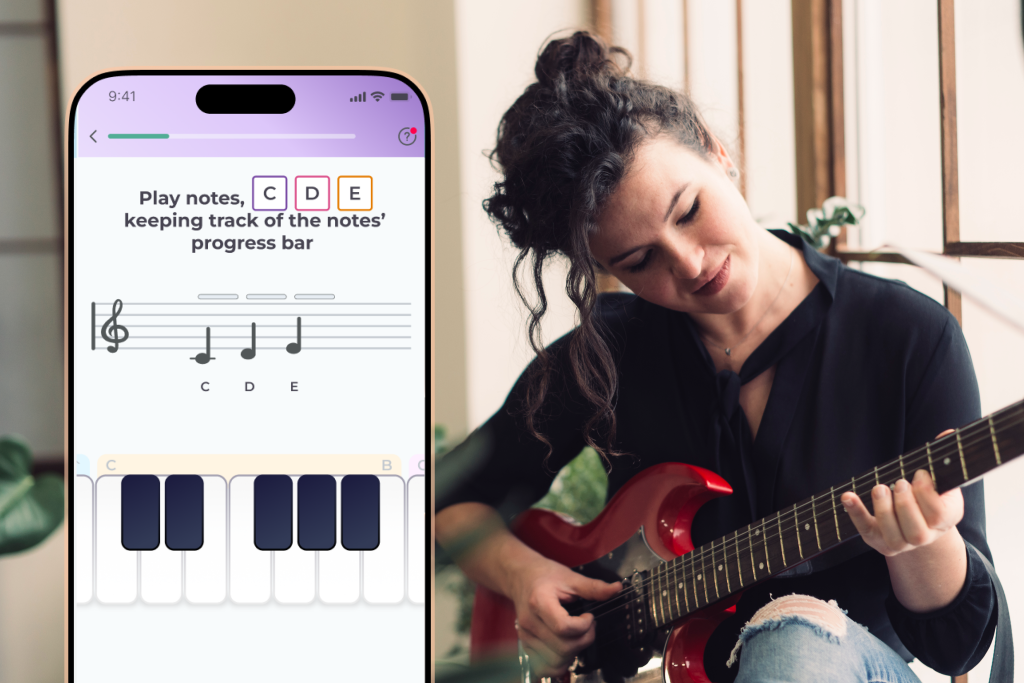
Traditional practice using a monotonous metronome has spawned several notable problems.
| Challenge | Description | Consequences |
| Strict adherence to rhythm | Reduced to maintaining steady tempo without regard for musical context, skill becomes. | Loss of sense for musical phrasing. |
| Inability to develop improvisation | Limited variability restricts adaptability and creative ability of improvisation. | Musical thinking development is at a standstill. |
| Inability to account for individual level | Level of performer not “read” by metronome; tempo doesn’t auto-adjust. | Frustration and low motivation due to skill-task mismatch. |
Not only does practicing with a fixed, unchanging rhythm fail to develop flexible time feelings, but it too often serves as a demotivator. Demands of today’s musical world, tools must adapt to the musician, aid in feeling the living pulse of music, not just insistently tick away. Precisely in such a need lies the foundation of innovative practice applications: putting at center focus not just the metronome but an interactive, comprehensive approach to cultivating time sense and rhythmic adaptability. Here, rhythm storyboard ideas, beat control, and practice analytics with session metrics start to matter.
Overview of Talented App Functionality — New Approaches to Timing
No longer is rhythm accuracy in the modern musical space just about keeping a steady metronome beat. Talented proposes to take the musicians beyond convention with the introduction of a wide array of tools that make timing more flexible and conscious.
Among Talented’s main functions influencing rhythm perception, the following can be mentioned:
- Adaptive Metronome. Instead of the classic “tick-tock,” this tool changes speed and accents depending on your performance and adjusts to the tempo and mood of the composition.
- Rhythmic Variations. Choosing unusual time signatures and creating complex rhythmic patterns for training sensitivity to intricate rhythms is possible.
- Dynamic Feedback. The app analyzes your performance in real-time, and it suggests either corrections or alternative exercises to get rid of common errors.
- Tempo and Meterhythm Modulation. These allow for smooth transitions between different speeds and rhythmic structures, which enhance flexibility in time perception.
While these functional features replace the usual metronome, at the same time, they expand the practice boundaries and transform time into a living, changing element of the musical process. Not only does this approach allow one to “keep the beat,” but it also develops an internal sense of rhythm that is so vital for performance and improvisation. All of this runs inside the Talented Music platform with beat visualization and interactive timing maps that serve as rhythm guides for real repertoire. This is where a visual metronome, tempo variety, and interactive maps meet timing drills.
How Talented Helps Develop Musical Flexibility and Time Feeling
Faced increasingly often with the challenge are modern musicians — not just to keep the rhythm, but flexibly to respond to tempo changes and unpredictable accents. In this context, not just an instrument but a true coach, developing a deep understanding of timing and time feeling, Talented becomes.
What sets Talented apart in developing musical flexibility?
- Adaptive rhythmic patterns: automatically changed tempo and complexity by the app forces the user instantly to restructure and reduce playing automatism.
- Live ensemble imitation — create the built-in instruments the sensation of interacting with other musicians, teaching to adjust rhythm in real time.
- Exercise customization: it allows choosing the user the difficulty level, as well as types of rhythmic accents and polyrhythms, helping to practice precisely those skills needed now.
- Real-time feedback: immediate analysis of mistakes and tips for improvement allows one to not only correct errors but also to deepen playing awareness.
Summing up, beyond the static metronome, Talented helps to go deep into a dynamic learning process. It’s time to feel how a musician learns not the device’s “tick-tock,” but as a living, changing flow that manages musical expression. In practice, that means sync exercises, interactive timing guidance, and dynamic guides that function as rhythm guides — a practical metronome alternative for real pieces and improvisation.
Interactive Teaching Methodologies With the App
Learning to play musical instruments has stopped being the tedious repetition of the same exercises. With the appearance of Talented, interactivity has become the key element of practice and new horizons for development have opened up.
Key features of the interactive approach in Talented:
- Dynamic adjustment to the performer
Do not wait for anything; the algorithms of the app monitor and adjust to play style, thereby making personal “feedback” and adjusting the exercises according to one’s skill level. - Integration with visual and sound prompts
Apart from rhythmic patterns, general sensory support that a user gets helps perceive and grasp material faster. - Game-based scenarios in education
Make the training process less boring and more motivating through the use of game mechanics — musical tasks are presented as quests, challenges, and competitions either with oneself or with others. - Opportunity of joint practice
Can be arranged via the network through joint sessions with other musicians, simulating real ensemble interaction; hence, developing collective playing skills.
Conclusion — The Future of Practice Beyond the Metronome
The shift away from the classical metronome and toward innovative tools such as Talented is driven by a change in needs concerning musical practice in the digital era. The future belongs to supple, adaptive, intelligent solutions not just to regulate rhythm but to form a sense of time and stimulate creative growth.
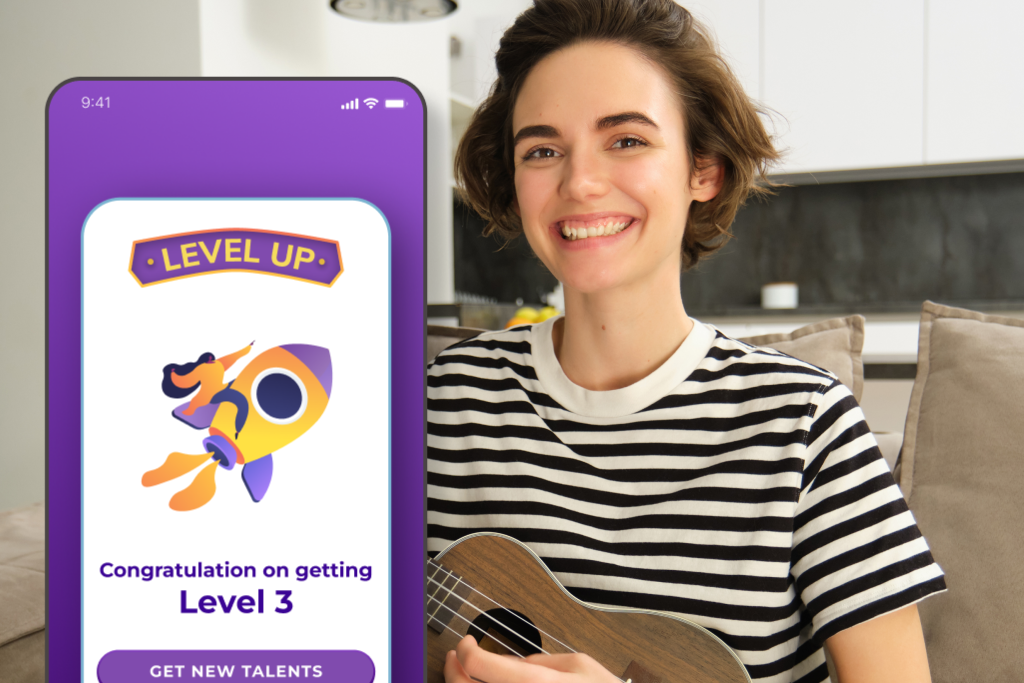
Therefore, instead of replacing the metronome, modern applications expand its functionality and set quite a different format for training. Being ready for the challenges of the modern musical world — where time is not a fixed quantity but a space for creativity and self-expression — practicing “beyond the metronome” means. Bridging to this future, the innovations in Talented become a new horizon of development and self-realization for musicians. In that journey, practice tools evolve into rhythm guides powered by beat detection and interactive timing; the Talented app consolidates tempo mapping, dynamic guides, and interactive exercises; and the concept of a metronome alternative turns into a full ecosystem of rhythm training and beat visualization.