1. Introduction to the Hyperlocal Delivery World
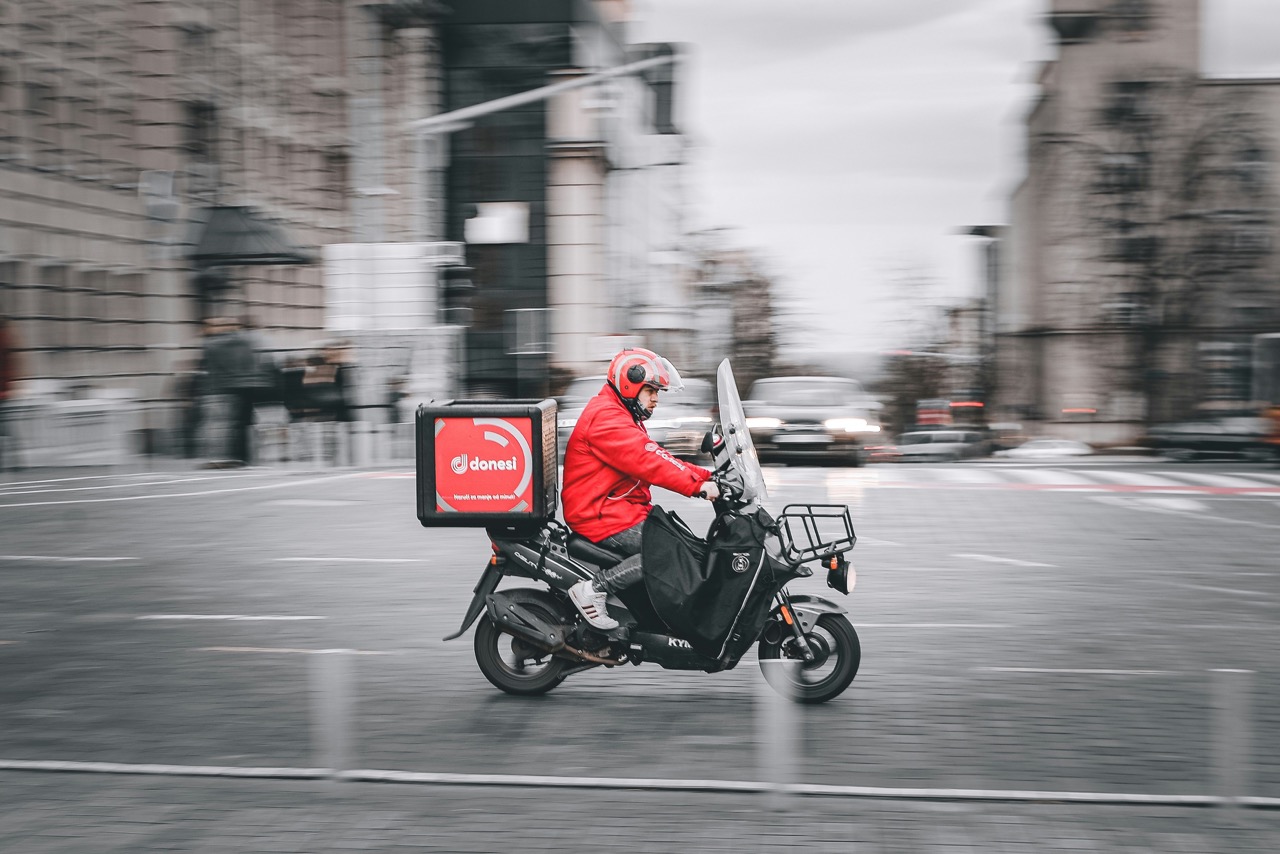
With city-to-city shipping coming into prominence, speed, precision, and personalization are the three axes of logistics in the future. Hyper-local delivery is not “closer than ever before”, but a completely new paradigm where geography-based proximity gains another dimension. Precision here isn’t just about reaching the right neighborhood — it’s about reaching the exact door, or even a specific entrance of a building. Such accuracy makes possible:
- Radical reduction of waiting times and easing city transport jams.
- Reducing delivery errors, with consideration of how frequently city addresses are not precise.
- Increasing user satisfaction through user-specific choices for viewing settings, entry points, and lifts.
Hyperlocal delivery technologies and business models lead the way, catering to increased demands of megacities. As cities grow with increased population, conventional logistics are confronted with increasing congestion, limited access, and costly last-mile delivery.
Chief characteristics for hyperlocal delivery applicability in present times:
| Factor | Description | Delivery Impact |
| Urbanization density increase | Greater number of citizens in smaller space | Traditional routing challenge |
| Diversification of housing | Multi-entry courtyards and tower and townhouse compounds | Indoor navigation qualified |
| Increasing customer expectations | Anticipation of quicker and more precise delivery | Use of IoT and geolocation technology |
| Environmental limitations | Demand for “green” solutions, traffic management | Pedestrian delivery and drones |
Hyperlocal delivery to tech professionals introduces an entirely new set of activities—anything from advanced routing algorithms and micro-location planning to sensor and tracker devices communicating with city infrastructure. Logistics optimization begins; it’s all about creating dense networks that interconnect tech, human beings, and infrastructure.
In the real world, it requires multi-level address semantics and routing setup:
- Destination geo-point to buildings or complexes.
- Precise location within (entrance, floor, apartment, doorway).
- Access opportunities (stairway, elevators, unloading areas, corridors).
This level of precision requires GPS + Indoor Positioning Systems (IPS), Wi-Fi positioning, BLE sensors, and visual navigation.

2. Technological Foundations of Routing
Routing “down to the meter” is not just A-to-B, point-to-point travel. It’s an unbelievably complex network of calculation, data, and learning techniques, where every second and every centimeter matter. At Celadonsoft, we observe how new route planning technologies are increasingly turning static logic into dynamic, self-adjusting systems.
Key considerations providing meter-level accuracy are:
- Multilayer mapping: They employ high-definition maps, not only showing roads but sidewalks, crosswalks, and even minor obstructions.
- Real-time and forecasting: The databases are regularly updated with traffic congestion, weather, and even events that may alter the best route.
- Hybrid algorithms: Combination of classical algorithms (e.g., Dijkstra’s) and machine learning methods and heuristics that can work under uncertainty and big data streams.
The technical problem is that not only are the routes scheduled at street level, but they are modified to a whole different finer mode—hyper-local delivery routing at sidewalk level, passageway level, and the exact location of the ultimate recipient. This requires more exact data sources and enabling models.
3. Geolocation and Delivery Role
Location discovery accuracy is the pillar on which ultra-local delivery rests. In our experience at Celadonsoft, millimeter or meter accuracy is two different worlds in logistics. That’s why AI routing depends critically on hyper-precise geolocation data.
Geolocation is so crucial because:
- Diversified access to technology: GPS alone is no longer sufficient. With the inclusion of Wi-Fi positioning, Bluetooth beacons, and inertial navigation systems, it goes from 5-10 meters accuracy to 1 meter or more.
- Contextual geolocation: Data from the physical world (interior rooms, buildings, walls) is being correlated with GPS coordinates to identify not only where the customer stands on the street, but on what side of the building, or even on what floor.
- Product and courier dynamic position tracking allowing the monitoring of where things are, also allows for quick re-routing in keeping with changes in the road network or terrain.
Applications for such sophisticated geolocation systems make feasible:
- Reduced delivery time through the accurate determination of the final destination.
- Reduction of errors and returns due to misaddresses.
- Enhanced customer satisfaction—orders delivered just in time and at the required location.
Technological advancements in sensors and devices also come into play: e.g., technologies in response to deep integration of GPS with local networks of sensors, especially in skyscrapers and densely populated cities. Finally, knowledge of technology and adoption of routing on a meter basis, with precise geolocation, are the foundations to building great hyper-local routing systems. These systems are revolutionizing urban logistics, enabling services to operate with unheard-of accuracy and speed. Celadonsoft is pushing these developments further, shaping the delivery tomorrow today.
4. Logistics Innovations: From Robots to Drones
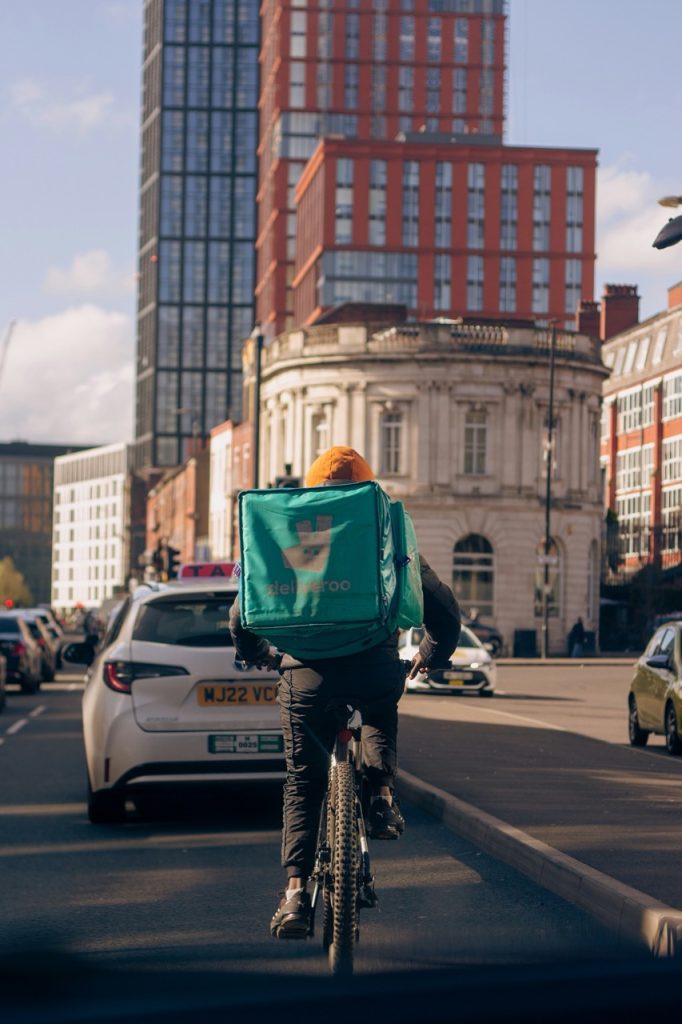
With the speed of rapid urbanization and increasing demands for rapid delivery, traditional logistics practices are losing their hold. Ultra-local delivery is no longer a trend but a reality facilitated by frontier technologies today. At Celadonsoft, we see and strive to transform traditional models to the next. AI routing is at the core of this shift, optimizing delivery paths in real time and slashing inefficiencies. Let us explore some of the most significant innovations that are transforming the urban logistics game.
1. Drones: City Wings of Light Delivery
- Independence from traffic jams and a potential to go around them swiftly positioned drones as among the top prospects in the new logistics revolution.
- The ability to deliver to remote locations out of reach for cars or bicycle couriers reduces the last distance of delivery—the famous “last meter.”
- Artificial intelligence allows real-time route adjustment in terms of changing weather conditions and city flows.
2. Autonomous Robocars and Robots
- Following city roads and sidewalks, robots are no longer the skilled fantasy of movie makers: they are capable of carrying small and middle-sized loads and offer a “door-to-door” service.
- With the help of sensors and adaptive software, the robots are even able to drive through thick urban infrastructure with confidence.
- Robots can also work day and night, saving a lot of manpower cost and delivery time.
3. Smart Dispatch Platforms
- Ultra-local logistics’ most important factor isn’t technology or management but management. Modern systems, based on machine learning, scan data about route congestion, weather, traffic, and customer preferences.
- They reallocate orders in real-time between kinds of couriers and devices to optimize efficiency and minimize waiting time.
- And there is an extremely significant one: personalization. These platforms are integrated with apps and CRM systems and allow real-time management of the delivery process.
4. Hybrid Delivery Models
- Application of hybrid systems consisting of live couriers, drones, robots, and vehicles in the past supports covering a wide spectrum of activity—ranging from late small orders to remote haulages with long storage intervals.
- For densely populated cities, the combined strategy is usually most suitable, wherein every segment serves its purpose at the ideal distance.
- This is done to maximize the reliability of the whole chain and maximize flexibility to any unexpected circumstances.
5. Green Technologies
- In Celadonsoft, we pay special attention to green development: electric transportation, green packaging, and greenhouse gas reduction—these are already industry standards in ultra-local logistics.
- Not only does innovation speed up delivery but also diminish its harm to the environment to the benefit of companies and cityscapes.
Overall, it is evident that there is a new urban delivery face today: robots and drones are no longer pilot programs but are already being built into an intelligent system for ultra-local logistics. In our case at Celadonsoft, future growth will be through the consolidation of different technologies and by being eternally sensitive to the idiosyncrasies of each consumer and city. The future lies in achieving even greater last-mile precision — delivery that is more accurate, faster, and environmentally friendly, not only keeping pace with but outpacing the evolving needs of the modern metropolis.
5. Benefits for Urban Communities
Ultra-local delivery is not only a trend but also a real way of improving the quality of life for city inhabitants with high densities. From the smallest details to broad change, all parties within the process stand to benefit considerably.
- Response time: Since delivery is computed for metered miles, traveling time is reduced to the barest minimum. This is extremely valuable for food, medicine, and day orders.
- Accuracy and dependability: With utmost routing detail, the chances of accidents and lost packages are extremely reduced. Your order arrives at the doorstep at precisely when it is required.
- Hospitality of environment: Reduced driving means less emission. Intelligent route calculation decreases the burden on the transport system and makes the city cleaner.
- Convenience of end consumer: Being able to see the courier in real time, second by second, is the new trust and convenience.
It also makes sense to think about the social perspective. Ultra-local delivery services facilitate the development of small businesses and the establishment of new jobs, which is especially true during the era of digitalization.
6. System Development Challenges and Risks
Ultra-local delivery development is not a walk in the park, though. There are some problems that require meticulous and thorough consideration in developing such systems.
- Accuracy of geodata: Small mistakes in coordinates can lead to delayed or lost packages. Data relevance is an ongoing issue.
- Integration with infrastructure: The city is a complex puzzle of roads, buildings, pedestrian zones. Systems must account for real-world situations, i.e., construction and temporary closures.
- Data security and privacy: Dealing with large volumes of location data raises issues of safeguarding user data. Not just an ethical issue but a legal one.
- Technological load: Sophisticated routing requires high computing power and stable connections, which are not always available in urban areas.
Additionally, resistance from traditional delivery agencies and potential regulatory control can slow down the realization of innovations.
7. The Future of Routing and Local Logistics
Looking into the future of ultra-local delivery reveals possibilities that on the surface seem to be real challenges for IT professionals but are already shaping the foundation of a new generation of urban logistics.
- Artificial intelligence and smart networks: Self-learning models won’t just process geodata but also user behavior, optimizing routes in real-time.
- IoT integration: Communication of data from sensors and smart devices will allow delivery to be more finely calibrated to indoor environments and current street conditions.
- Blockchain and decentralization: Distributed ledgers will be the standard for making logistics operations more transparent and secure.
- Hybrid delivery models: The combination of drones, autonomous robots, and traditional couriers in a hybrid system will provide the optimal trade-off between speed, coverage, and resource allocation.
Celadonsoft thinks that the way forward to success will be in building platforms that converge these technologies and scale up to address the demands of the biggest cities. We think that the focus will be on user experience, where delivery will not only be the fastest but also the most convenient, transparent, and green.
8. Conclusion: Where is Urban Delivery Going?
During a period of rapid digitalization and urbanization, traditional delivery networks are falling behind the growing demands of urban citizens. Celadonsoft has aligned with the IT community agenda and the tech revolution, envisioning the future of urban logistics in ultra-local routing and last-mile precision. It’s not merely about getting from point A to point B — it’s about navigating a complex system that accounts for even the smallest scales, down to one meter.
What are these prospects of development for us today? Let’s examine the key directions shaping the whole industry’s future:
- Universal integration of ultra-accurate geolocation: Positioning technologies will become an inherent norm in city delivery. Very accurate location of the destination saves time on waiting and mistakes, which is particularly precious for cities with dense construction.
- Autonomous systems and automation: Robots and drones are advancing to the next level of interactivity and flexibility, making delivery not only faster but also maximally convenient for the ultimate recipient. Artificial intelligence will continue to advance, providing “smart” solutions even for the most complex routes.
- Flexible and modular logistics chains: The future is with systems that will be capable of adapting to changing city environments and customers’ needs, integrating various vehicles and services into a single ecosystem.
- Environment-friendliness: Application of energy-efficient methods and reduction of carbon footprints is among the priority objectives of the industry. In this context, ultra-local delivery contributes to the reduction of congestion and environmental harm.

With all these new trends, there are also challenges:
- The need to establish flexible standards and protocols for system interaction;
- Protecting users’ privacy and providing data security;
- Enabling technical infrastructure that accommodates ever-changing city conditions.
Celadonsoft’s concept is that the key to the future success of ultra-local logistics is a massive and high-quality deployment of sophisticated routing algorithms at the meter level in cities.
Remember: the future success of ultra-local logistics is not actually technology. It is the collaboration between people, information, and smart devices. This will turn services in cities as accurate as possible, customized, and available for everyone.
In short, the trend direction can be characterized as follows:
- Speed and accuracy: Shortening delivery time and errors;
- Intelligence and autonomy: Constructing AI and robotics capabilities;
- Ecology and sustainability: Proper utilization and reduced environmental impact;
- Flexibility and scalability: Coping with issues of the future and now.
Seeing these trends come together is to be forward-thinking, innovating out-of-the-box solutions, and setting standards that will influence urban logistics for the next decades. Celadonsoft challenges the IT community to create this future together now—together we will reinvent delivery tomorrow.